Showing posts with label mantis shrimp. Show all posts

Thursday, June 19, 2014

So long, and thanks for all the shellfish


This Monday I learned, to my great dismay and regret, that on Sunday June 22 the National Zoo is closing its Invertebrate House, the only part of the zoo that highlighted the species representing 97% of all animal life and an incredible, awe-inspiring diversity of shapes, life cycles, and behaviors.

For more on the closing, you can read Gwen Pearson’s excellent post on Wired.com.

There’s nothing really to do about it except be sorry. I myself think it’s a tremendous shame that we’ve lost not just beautiful and fascinating animals but, through them, the chance to introduce the public to the enormous variation and value of species that many people don’t even realize exist.

So in preparation for the closing this weekend, in celebration of the Invertebrate House and its denizens, I’m posting a few more pictures of these astounding animals. Enjoy.

[cuttlefish; they can change their skin's texture in less than a second:]

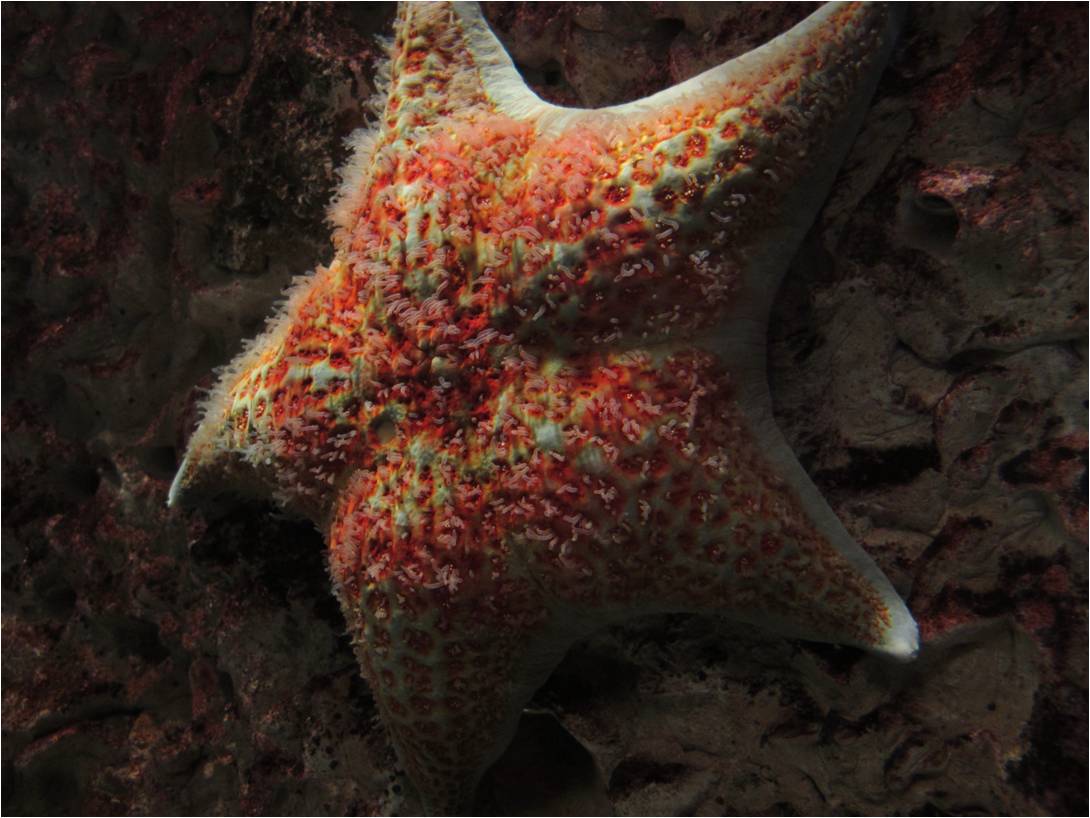
[brittle star (related to starfish and sea urchins):]

[jellyfish:]


[sea anemones:]

[cleaner(?) shrimp on a cnidarian (maybe a soft coral?):]

[tube worm:]

[sea urchin:]

[soft coral or sea anemone:]

[mantis shrimp:]


Goodbye, all...


{A note: I do write all text and take all pictures. Please do not reproduce either without my permission.}

Wednesday, August 8, 2012

Undomesticated Peeves Part 1


(Well, they can’t be “pet peeves” if they’re about wildlife, can they?)

Recently Patti Abbott posted a question on her blog asking what relatively small things annoyed her readers. Being who I am, I had to struggle to keep the list down, but one of my foremost irritations is, of course, a biology-related one.

Often—faaaar too often, in our supposedly civilized society—people confuse mammals with animals. This is not to say that mammals are not animals. However, just as all squares are rectangles but not all rectangles are squares, “animals” is a category that includes a vast array of species that are not anything like mammals (which themselves make up only a tiny percentage of the number of animals out there).

And I have to admit, I’m baffled when people say that insects or fish or octopi aren’t animals. What do they think they are—fruit?


[this mantis shrimp is having an existential crisis:
when it looks in the mirror, does it see an animal?]

This is not just a trivial thing, given that it highlights both our mammal-centric thinking (dangerous as well as profoundly inaccurate) and our general ignorance of basic zoology. Or maybe it’s not true ignorance so much as carelessness; surely if someone paused to think, he or she would realize that there is no category other than “animal” into which they could place alligators or stick insects or barnacles. But it worries me that anyone would have to pause to think about it.


Maybe I’m just being snobbish, complaining about these taxonomical inaccuracies. But—here’s the great part—I don’t care!


Don’t say that jellyfish, or fruitflies, or any other species lacking hair and mammary glands, aren’t animals. There’s just no excuse for that kind of thing.

Stay tuned for more of my education-through-harangues campaign!


{A note: I do write all text and take all pictures. Please do not reproduce either without my permission.}

Thursday, March 3, 2011

The End of the Secret-Mantis-Shrimp Conspiracy

That’s right—not only do I have much better pictures of the SMS now, but the Secret Mantis Shrimp is a secret no longer. Annie and I went to the invertebrate house this weekend with the firm intention of revealing the SMS to all and sundry—visitors, volunteers, keepers, you name it. (Perhaps my intention was rather more firm than hers—but nonetheless.)

And we did it: we stared into the tank, exclaiming loudly and with tremendous over-acting, “Look! There’s another mantis shrimp in here!!!”


That got at least a few people to notice it (although people tend to have surprising difficulty finding and noticing invertebrates; maybe they think “invertebrate house” refers to the spinelessness of the structure rather than what’s contained within it?). Then we actually pointed it out to a friendly volunteer, who was very surprised but at least didn’t pretend—as others had—that it didn’t exist.

He said he’d been sick the past week when there was a meeting of volunteers, and speculated that he might, therefore, have missed having been told about the “new” addition to the invertebrate house. Now, I think the important point we can gain from this is: our only source did not attend the volunteer meeting; this means there’s no evidence to disprove my hypothesis that there was no mention of the SMS at the meeting—or, if it was mentioned, volunteers were told to keep it secret. I think we can consider the conspiracy confirmed.


—In any case, the conspiracy is no longer, since this volunteer was more than happy to point out the extra mantis shrimp to visitors. I haven’t been back to the invertebrate house since, but I suspect I’ll find that the zoo has had to give up on whatever nefarious plans it had regarding the SMS; I wouldn’t be surprised to find the tank appropriately labeled as well. As for what those nefarious plans could have been—well, I can’t say for sure, but given the mantis shrimps’ powerful punches, I can only speculate that the plans involved demolition or weaponry or both.

And thus Annie and I foiled their schemes and, at the same time, provided zoo visitors with the chance to see two--count 'em, two--of these bizarre crustaceans.

All in a day’s work.

{A note: I do write all text and take all pictures. Please do not reproduce either without my permission.}

Saturday, February 19, 2011

They’re Everywhere!: An Overabundance of Ophiuroids and the Mantis-Shrimp Conspiracy


I am an observant person. Not about some things, like whether my desk is a mess or someone’s flirting with me or the architecture of a house is Georgian—but about many things, in particular things zoological, I am quite perceptive. I notice hawks perched on high branches; I spot a fox resting by the creek; I see the still, golden eye of a frog just above the surface of an algae-laden pond.

Visits to the zoo, overall, don’t require a great deal of that talent, since pandas and flamingos and lions are, by and large, fairly easy to spot, even in the relatively ample space provided for them. But even the zoo’s enclosures can offer the opportunity to notice more.

This is particularly true in the invertebrate house, since some of the inhabitants (e.g. octopi and cuttlefish) are masters of camouflage and most tanks contain myriad tiny, unmentioned crustaceans and gastropods grazing on the glass or the pebbled bottom. I especially like examining the coral-reef-habitant aquarium, in part because it’s right next to the mantis shrimp’s tank and in part because it’s full of small creatures that go unremarked by the majority of visitors.


This past week I noticed something that I’d never seen before: baby ophiuroids!

This means nothing to you, right?

Ophiuroids are also known as “brittle stars,” and they’re related to, and look a lot like, starfish—but while starfish have very clearly star-like shapes, brittle stars have a central disk from which radiate long, snaky arms (hence “ophiuroid,” since “ophiuros,” or something like that, is “snake” in Greek).


[a sketch of a brittle star]

[a photo of their arms,
to give you an idea of their snakiness]

Brittle stars are pretty cool, because although they, like all echinoderms (starfish, sea urchins, sea cucumbers, etc.), lack brains and even heads, individuals of light-sensitive species each have the equivalent of a compound eye. I don’t know the science perfectly, but I believe that their dorsal arm plates function as little lenses that, when all added up, make something like a compound eye, allowing the brittle stars to “see” light. (For more accuracy and more details, visit the Aizenberg lab’s research webpage, where you can even read the article they published in Nature about it). –That’s not really relevant to what I noticed at the zoo, but it is really impressive.

Brittle stars, like most echinoderms (if not all of them—I’d have to check), are what are called “broadcast spawners.” This doesn’t mean that they use a loudspeaker or radio program to announce their interest in breeding; it means that they cast their gametes (eggs or sperm) upon the waters, letting the currents intermingle them and create fertilized eggs that develop into larvae and, eventually, young brittle stars. It doesn’t sound like a whole lot of fun, compared to many other means of reproduction, but I couldn’t say for sure, and the brittle stars aren’t talking.

—All this is just by means of introduction, and to say that there must have been quite a flurry of gamete-casting a while back, because the coral-reef tank is full of little tiny brittle stars—all hidden in crevices of rock so that only a couple of their little waving arms are visible. (Visible to someone with their nose practically against the glass, that is.) If you didn’t know what brittle stars looked like, you’d never guess you were seeing mini-ones.

[arrows indicate all the little arms]

[even one under an empty shell!]

[the size of an adult, for comparison]

It was a pretty thrilling discovery for me, and one I didn’t share—although I did do some stealth educating and pointed out the adult brittle stars, a hermit crab, snails, and the mantis shrimp to several visitors.

Speaking of the mantis shrimp, I got a few good views of it as well, though its habit of briefly emerging from and then diving back into its burrow doesn’t lend itself to great photos. But I’ve been curious for a week or so now about why a nearby tank, which had used to house an impressive display of tube-worms, now seemed to have a Secret Mantis Shrimp living in it. I thought of it as a Secret Mantis Shrimp (or SMS) because it was even more retiring than the display mantis shrimp and because the tank was poorly illuminated and had no label describing its inhabitant.

[the Secret Mantis Shrimp (SMS)]

Now, however, I have more reasons to designate it a Secret Mantis Shrimp, because the zoo volunteers either don’t know about it or pretend they don’t know about it. A boy peering into the tank exclaimed impatiently, “I can’t see what’s in here!” and the nearby volunteer told him, “That’s because there’s nothing in there.”

(It’s worth mentioning that this would be inaccurate even if the SMS weren’t resident: I've learned from painful personal experience during my research that a tank full of seawater will having things living in it whether you planned them or not. For example, in addition to the SMS, this tank has a few tiny anemones or hydroids growing in it as well as a quite beautiful little tube-worm.)


Another, different volunteer, who came by to tell me things I already knew about the overt mantis shrimp, also denied the existence of the SMS. Part of it is my own fault; perhaps the shyness of the SMS rubbed off on me, because instead of just asking, “Why is there another mantis shrimp hidden in that unlit tank?” I asked, “Is there another mantis shrimp in that tank over there?”

“No,” he said decisively, and—even though I had left an opening for that answer by my stupid question—I became annoyed. Unfortunately, he went away to feed the anemones before I could confront him with his (a) misinformation or (b) lie.

[okay, it's not a high-quality shot,
but it's still worlds better than
those supposed UFO pictures]

Thus I cannot say for certain that the SMS is part of a vast Mantis Shrimp Conspiracy—but I’ll say it anyway, and what’s more, I’ll crack it wide open (to hell with Wikileaks)! So when the papers and internet are all abuzz with news of the second, surprise mantis shrimp at the Zoo’s invertebrate house, remember—you heard it here first.


{A note: I do write all text and take all pictures. Please do not reproduce either without my permission.}

Monday, January 31, 2011

A Nice Crustacean Punch

As I’ve mentioned in a previous post, I really like mantis shrimp, and every time I visit the Invertebrate House I try to get a good look at, and a couple of good pictures of, the zoo’s resident example.

I’m a little concerned, though, because, while the mantis shrimp seems initially intrigued by the sight of my camera placed against the glass—and will in fact come out of its burrow to approach the object—it then appears either alarmed or disaffected by it, and after a minute will huffily retreat.


This is bad enough in itself, of course, since I want to keep the mantis shrimp visible for as long as possible—and have no desire to traumatize it with my lens. But what I’m really worried about is that the sight of the camera has triggered within the shrimp a deep, slow-burning rage that will finally express itself in a punch even more powerful than those typical of the species—a punch so powerful that it will shatter even the specially reinforced glass of its enclosure, and the camera beyond it as well.


On the other hand, that would make a pretty good story…


{A note: I do write all text and take all pictures. Please do not reproduce either without my permission.}

Tuesday, January 4, 2011

Through a Glass Brightly

I recently got a new camera—not to replace my main camera, mind you (which unfortunately is acting as if it wants to be replaced, but that’s another story), but just as a good, smaller alternative for certain situations, like those with low light. And I have to tell you that you’ll be seeing many more photos from the Invertebrate House and other indoor exhibits now, because I love the amount of detail and color it captures in those dark places. This post is basically just an excuse to show you some photos I took of organisms in aquaria and terraria, but I promise I’ll get over my photographic excitement and write some more substantial commentary soon.

But for the moment—get a load of this mantis shrimp!


And how lovely are the colors on this enormous hermit crab, which seemed to be wondering whether I had a better shell for it concealed on my person?


And observe the ethereal beauty of these jellyfish, which look like dance costumes painted by Degas and minus the ballerinas:


And finally, check out the eye (or maybe many eyes? or maybe something else entirely?) of this handsome tarantula, a creature that seems to me to exude a certain gravitas (which perhaps comes with the territory if you’re poisonous):


Ah, yes; there will be good days ahead…


{A note: I do write all text and take all pictures. Please do not reproduce either without my permission.}

Wednesday, December 1, 2010

I’ve Got a Mantis Shrimp and I’m Not Afraid to Use It

(I hope you'll all forgive the last two days' worth of shameless self-promotion. I now return you to your regularly scheduled program...er, blog.)

On the day after Thanksgiving, our visiting relatives and we took a walk in the Zoo, where we crouched low and got alpacas to investigate us, saw small-clawed otters being adorable, and half froze in the chilly wind. We were all happy to get into the warmth of the Invertebrate House, where I tried not to pontificate too much about things like the water-vascular systems of echinoderms. As we looked into some of the smaller tanks, what should we see but a mantis shrimp! I had never seen it before, and a zoo employee informed us that it didn’t come out of its burrow very often.

In case you’re unfamiliar with them, mantis shrimp are not actually shrimp, although they do look kind of like big, extremely lengthened ones. They’re very territorial crustaceans that spend a lot of time tending to, and cleaning out, their burrows, and when other animals approach their territory they tend to lash out with a punch so violent that its force is equivalent to a .22-caliber bullet. They can even break aquarium glass, and we were told the mantis shrimp’s tank was specially reinforced.


It looked pretty mild-mannered to us, though, and very curious—but that could be its anatomy. Mantis shrimp have enormous compound eyes, each of which provides them with trinocular vision, and they can rotate these eyes independently of one another. When the mantis shrimp investigates a watching human (or their camera lens), its eyes rotate all over the place, and sometimes areas get darker or lighter; I don’t know what that’s about, but maybe there’s a pigment used for specific kinds of focusing? (Anyone who knows more about crustacean eyes than I do should jump in at any time.)


And the mantis shrimp does seem to like investigating people and things; the zoo employee (I don’t know her position) said that she’s sometimes able to lure the mantis shrimp out by putting her cell phone near the glass: it will come out to wiggle its eyes at it.

It was a fabulous sighting, not least because these crustaceans are so spectacularly colored around their eyes, chelipeds, and tail:


It also made me think about how mantis shrimp could be used in the commission of crimes: they could be weapons; they could break glass in robberies; they could serve as a distraction during a pickpocketing—the possibilities are endless.

Of course, you’d have to carry a bowl of seawater around with you, which might not help you look like an inconspicuous, innocent bystander, but I’m sure there’s a way around that. And once you figure that out, I bet a whole range of marine invertebrates could be handy criminal weapons/tools/accomplices! I’ll start making a list.


{A note: I do write all text and take all pictures. Please do not reproduce either without my permission.}
Related Posts Plugin for WordPress, Blogger...